Argentina
 Bolivia
 Brazil
 Chile
Chile Colombia
 Ecuador
 Paraguay
 Peru
Peru Uruguay
 Venezuela
 Aruba
Aruba Belize
 Costa Rica
 Dominican Republic
 El Salvador
 Guatemala
 Mexico
 Nicaragua
 Panama
How to Start a Business in Panama (2026): Step-by-Step Guide
To start a business in Panama in 2026, most foreign founders form a sociedad anónima (S.A.). You choose the structure, appoint a resident agent (by law, a Panamanian lawyer or law firm), check the name, sign the articles of incorporation (pacto social) before a notary, register the company at the Public Registry (Registro Público) and pay the first annual franchise tax (tasa única). You then file the Aviso de Operación on Panamá Emprende, which can also issue the RUC tax number from the DGI, and open a corporate bank account. Shareholders can be of any nationality and do not need to live in Panama. Timelines depend on the Public Registry and on how quickly your documents are ready. Contact us for a quote.
Want it handled for you? Talk to Easyco about company formation in Panama. Comparing structures? See the types of companies in Panama.
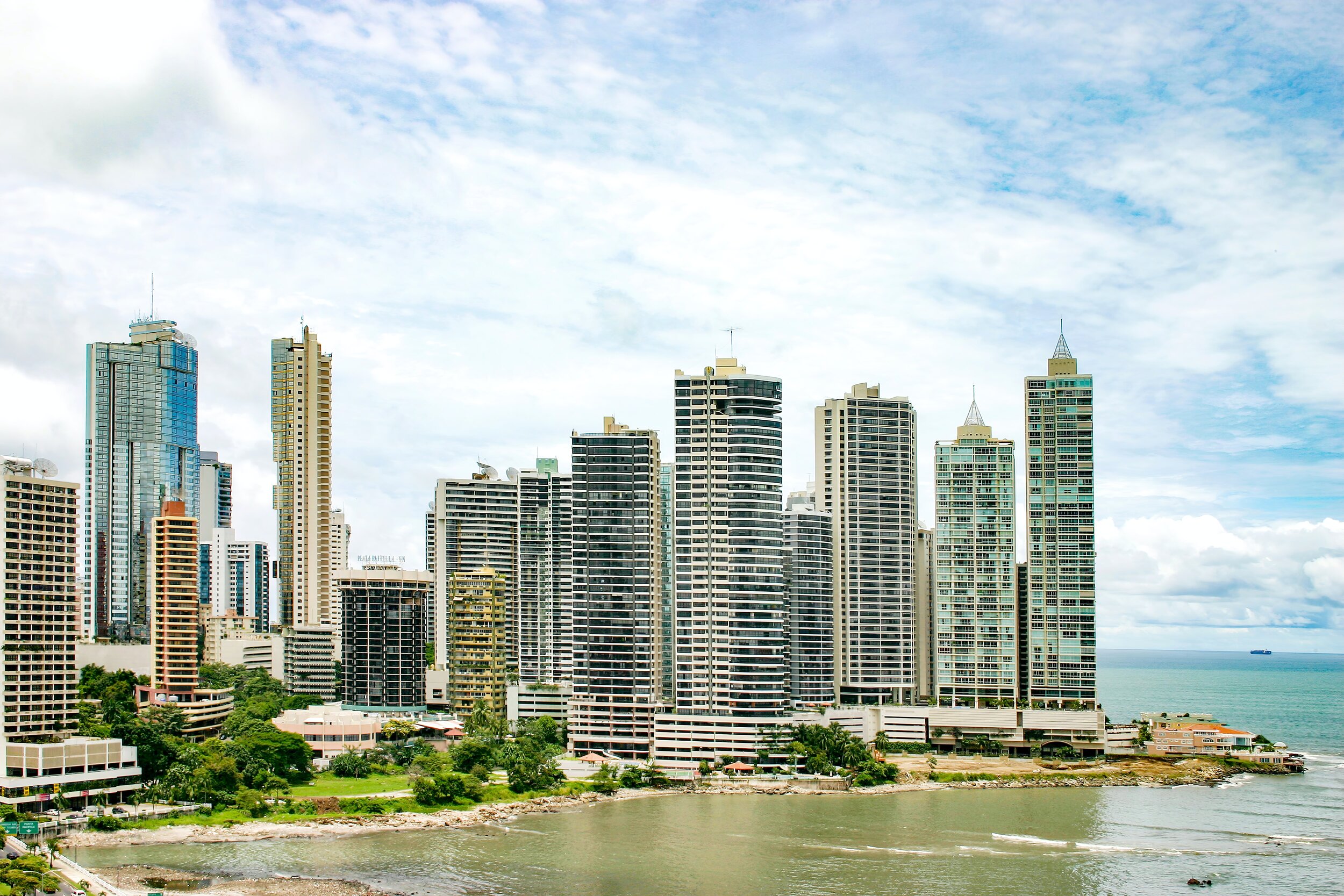
Panama has a dollarized, service-based economy built around the Canal, logistics, banking and trade. Its company law dates from 1927 (S.A.) and 2009 (SRL), and it has a territorial tax system. Since 2020, Panama has also adopted stricter transparency rules, so a well-documented setup matters more than ever.
How to start a business in Panama: 7 steps
1. Choose between an S.A. and an SRL
-
Sociedad Anónima (S.A.) — recommended for most foreign founders. Formed by two or more subscribers of any nationality, who do not need to live in Panama (Ley 32 de 1927). It needs a board of at least three directors and officers (president, secretary and treasurer are standard). There is no legal minimum capital; the authorized capital is set in the pacto social. Banks and counterparties know this structure well.
-
Sociedad de Responsabilidad Limitada (SRL). At least two partners (individuals or companies), with no legal maximum. It is run by administrators named in the pacto, and capital can be stated in any currency (Ley 4 de 2009). Under Ley 4 de 2009 art. 28, income tax falls on the partners in proportion to their share, so it suits founders who want that treatment.
A foreign company can also register a branch by filing its apostilled, translated corporate documents at the Public Registry.
2. Appoint a resident agent
Every Panamanian S.A. and SRL must have a resident agent, and the law requires it to be a Panamanian lawyer or law firm. The resident agent files the incorporation, carries out know-your-customer checks, and records the company’s beneficial owners in Panama’s private beneficial-owner registry (Ley 129 de 2020). Easyco coordinates the resident agent for your company.
Foreign documents must be apostilled (or legalized) and translated into Spanish.
3. Check the company name
The name must be available at the Public Registry and include the right suffix, such as “S.A.” or “S. de R.L.”
4. Sign the pacto social before a notary
The articles of incorporation set out the name, purpose, authorized capital and shares, directors and officers, and the resident agent. They are formalized before a Panamanian notary.
5. Register at the Public Registry and pay the tasa única
The resident agent files the deed at the Registro Público de Panamá. Registration gives the company legal existence. The first annual franchise tax (tasa única, USD 300 a year for an S.A.) is paid at registration.
6. File the Aviso de Operación and get the RUC
To trade in Panama, the company files an Aviso de Operación on Panamá Emprende (Ley 5 de 2007), which requires prior registration at the Public Registry. The platform can obtain the company’s RUC (Registro Único de Contribuyente) from the Dirección General de Ingresos (DGI) if the company doesn’t have one yet. Some activities need extra sector licences.
7. Open a corporate bank account
Panamanian banks apply strict KYC, especially for companies with foreign owners. Easyco helps you prepare the file and coordinates the account opening.
After incorporation: what to keep up with
- Tasa única: USD 300 a year for an S.A. Companies registered January–June pay by 15 July, and those registered July–December by 15 January. Late payment adds USD 50, and three unpaid periods suspend the company’s corporate rights.
- Accounting records: the company must keep its records and supporting documents for five years and tell its resident agent where they are kept (Ley 52 de 2016, amended by Ley 254 de 2021).
- Beneficial owners: any change must be reported to the resident agent so the registry stays up to date.
- Income tax: 25% on Panama-source taxable income. Calendar-year returns are due 31 March.
- ITBMS (VAT): 7% general rate.
Easyco’s tax and accounting team can take these filings off your plate.
Panama’s territorial tax system, in brief
Under Código Fiscal art. 694, Panama taxes income produced within its territory, and foreign-source income is generally not taxed. There is one new exception: from fiscal year 2027, Panamanian entities that belong to a multinational group and earn certain foreign-source passive income (such as dividends, interest or royalties) must show economic substance in Panama, or that income is taxed at 15% (Ley 526 de 2026). See tax benefits in Panama.
How long does it take?
Timelines depend on the Public Registry, the notary and how quickly your apostilled documents and KYC file are ready. Bank onboarding is often the longest step. We give you a schedule with your quote.
FAQ
Can a foreigner own 100% of a Panamanian company?
Yes. Shareholders of an S.A. can be of any nationality and do not need to live in Panama. Some regulated activities have their own rules.
Is a resident agent mandatory?
Yes. Every S.A. and SRL must appoint one, and it must be a Panamanian lawyer or law firm.
Is there a minimum capital?
No legal minimum for an S.A. or SRL. The authorized capital is set in the pacto social.
Do I need to travel to Panama?
Not to form the company. The resident agent files with the Public Registry, and documents are signed and apostilled abroad as needed. Some banks may ask for an interview.
How do I set up a company in Panama as a foreigner?
Most foreign founders form an S.A. Shareholders can be any nationality and don’t need to live in Panama. A Panamanian resident agent (a lawyer or law firm) files the pacto social with the Public Registry. You then file the Aviso de Operación on Panamá Emprende, get the RUC and open a bank account. Documents can be signed and apostilled abroad.
How much does it cost?
It depends on the structure and services you need. Contact us for a quote.
Start your company in Panama with Easyco. We coordinate the resident agent, Public Registry, Panamá Emprende, RUC and bank account, and can stay on for tax, accounting and payroll.