


 Argentina
 Bolivia
 Brazil
 Chile
Chile Colombia
 Ecuador
 Paraguay
 Peru
Peru Uruguay
 Venezuela
 Aruba
Aruba Belize
 Costa Rica
 Dominican Republic
 El Salvador
 Guatemala
 Mexico
 Nicaragua
 Panama
How to Form a Company in Guatemala (2026): 8 Steps
To form a company in Guatemala in 2026, most foreign founders use a sociedad anónima (S.A.). It needs at least two shareholders, who can be individuals or companies of any nationality, and an initial paid-in capital of at least Q200. The steps are: choose the structure, appoint the administrator and legal representative, check the name, sign the deed of incorporation before a Guatemalan notary, and file with the Registro Mercantil. The registry issues the company’s patentes de comercio and assigns its NIT tax number. After that you activate the company’s tax registration (RTU) with the SAT, choose its income tax regime and open a corporate bank account. Timelines depend on the registry and on how quickly your documents are ready. Contact us for a quote.
Want it handled for you? Talk to Easyco about company formation in Guatemala. Comparing structures? See the types of companies in Guatemala.
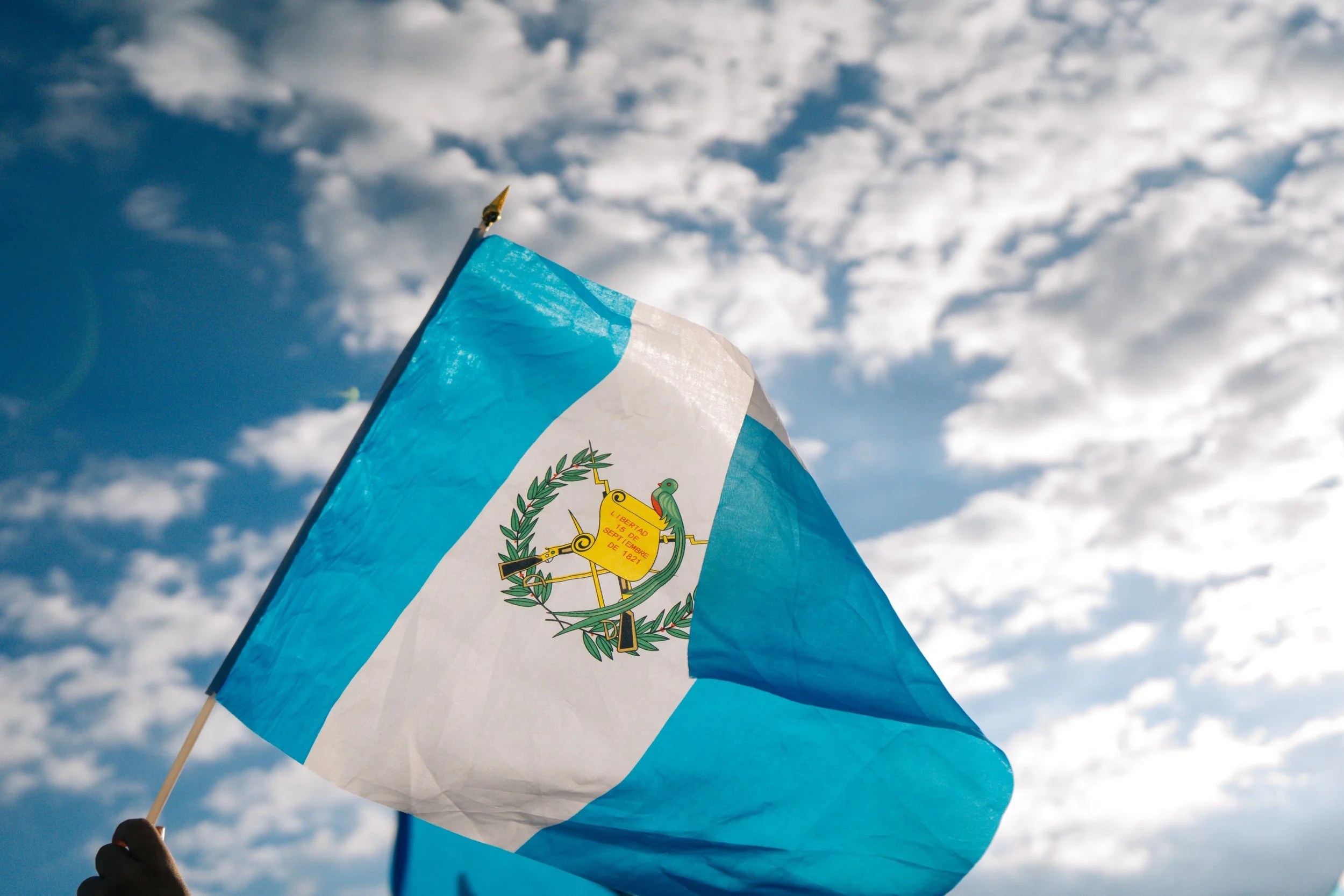
Guatemala is Central America’s largest economy and a CAFTA-DR member, with ports on both the Pacific and the Atlantic. Company law is set by the Código de Comercio (Decreto 2-70). The 2017 reform (Decreto 18-2017) cut the minimum capital and moved registry publications online, and the anti-money-laundering law that took effect from mid-September 2026 (Decreto 15-2026) added new shareholder and administrator reporting duties.
How to form a company in Guatemala: 8 steps
1. Choose the structure
-
Sociedad Anónima (S.A.), recommended for most foreign founders. At least two shareholders, who can be individuals or companies of any nationality. The initial paid-in capital must be at least Q200 (Código de Comercio art. 90), and each shareholder must pay at least 25% of the nominal value of every share they subscribe (art. 89). If cash contributions exceed Q2,000, they must be deposited in a bank account in the company’s name (art. 92). Shares make it easy to bring in investors later.
-
Sociedad de Responsabilidad Limitada (S.R.L.). Up to 20 partners (art. 79). Capital is divided into contributions (aportaciones), not shares (art. 78), and it must be fully paid in before the deed is signed (art. 81).
-
Sociedad de Emprendimiento (S.E.). A simplified company for one or more individuals, formed online with advanced electronic signatures and no public deed. It is capped at Q5,000,000 in annual income (Decreto 20-2018).
A foreign company can also open a branch instead. That requires capital assigned to its Guatemalan operations, a bond of at least the quetzal equivalent of USD 50,000 set by the Registro Mercantil, and a local agent with broad powers (Código de Comercio art. 215). Compare the options in types of companies in Guatemala.
2. Appoint the administrator and legal representative
An S.A. is run by a sole administrator (administrador único) or a board (consejo de administración). The legal representative is usually the sole administrator or the chair of the board, and each appointment lasts up to three years and can be renewed (art. 162). Appointments are made by notarial act and registered with the Registro Mercantil. For companies formed from mid-September 2026 (Decreto 15-2026), every member of the administration and every manager must be registered, not only the legal representative (Decreto 15-2026).
The law doesn’t require the representative to be Guatemalan. However, the SAT requires the legal representative to hold their own NIT with fingerprints and a photo on file before the company’s tax registration can be completed, and banks deal with them directly. That is why most foreign-owned companies use a representative based in Guatemala. Easyco can coordinate this for you.
3. Check the company name
Before the deed is signed, check with the Registro Mercantil that the name isn’t already registered. We run this check for you. An S.A. name must end in “Sociedad Anónima” or “S.A.”, and an S.R.L. name must include “Limitada” or “Ltda.”
4. Sign the deed of incorporation before a Guatemalan notary
The deed of incorporation (escritura pública de constitución) sets out the shareholders, name, purpose, authorized, subscribed and paid-in capital, administration and domicile. The administrator’s appointment is recorded in a separate notarial act. A physical registered address is required.
Shareholders who can’t attend the signing in Guatemala can act through a power of attorney granted abroad. Documents issued abroad must be apostilled or legalized, and anything not in Spanish needs an official translation. We coordinate the translations. If you contribute registrable assets such as real estate or vehicles, proof of transfer must reach the registry within three months (art. 341).
5. File with the Registro Mercantil
The deed and the appointment are filed with the Registro Mercantil General de la República, online or in person, together with the joint Registro Mercantil–SAT application (form SAT-RM02). That one form covers the company, its business (empresa mercantil), the legal representative, the accountant, the company’s tax affiliations and the authorization of its accounting books. Registry fees (aranceles) are calculated on the authorized capital.
6. Receive the registration, patentes and NIT
Once the filing is approved, the registry records the company, issues its patentes de comercio for the company and its business (physical or electronic, art. 344), authorizes its books and assigns its NIT through the SAT desk inside the registry. The registry then publishes the registration notice (edicto) on its own electronic channel, so no newspaper publication is needed (arts. 341 and 343). Objections to the company name can be filed within three business days of that publication (art. 350).
7. Activate the RTU at the SAT and choose the income tax regime
The NIT arrives without tax data. The legal representative activates the company’s Registro Tributario Unificado (RTU) through the SAT’s Agencia Virtual, confirms its tax affiliations, and names the accountant, who accepts the assignment from their own Agencia Virtual. The company can’t invoice until this step is done. New taxpayers must issue electronic invoices under the SAT’s FEL system.
This is also where you choose the income tax (ISR) regime. That choice shapes your tax bill, so it is explained in its own section below.
8. Open a corporate bank account and register as an employer
Banks ask for the patentes, the NIT and RTU, the legal representative’s appointment and ID, and details of the company’s beneficial owners. Easyco helps you prepare the file and coordinates the account opening. See how to open a corporate bank account in Guatemala. When you hire, register with the IGSS (social security) and set up payroll in Guatemala.
The decision that shapes your tax bill: 25% on profit or 5–7% on income
- Régimen sobre las utilidades (profits regime): 25% on net taxable profit, after deductible costs and expenses (Ley de Actualización Tributaria, Decreto 10-2012, art. 36). Quarterly payments are due within the month after each quarter ends. The fourth quarter is settled with the annual return, which is due by 31 March for the calendar year (arts. 38–39).
- Régimen opcional simplificado (simplified regime): 5% of monthly gross income up to Q30,000, plus 7% on the excess (art. 44). No costs are deducted. The tax is mostly withheld by customers, and the company files a monthly return within the first ten days of the following month (art. 49) plus an annual informational return by 31 March.
As a rule of thumb, the simplified regime suits low-cost, high-margin activities, and the profits regime suits businesses with significant costs. The regime is chosen at registration and can only be changed from the next tax year. Companies in the profits regime whose gross margin exceeds 4% of gross income also pay the Impuesto de Solidaridad (ISO): 1% of the greater of one quarter of net assets or one quarter of gross income, paid quarterly and creditable against ISR. New companies are exempt for their first four quarters, and so are companies in the simplified regime (Decreto 73-2008, arts. 4, 7, 8 and 11). We model both regimes for your business before you register.
After incorporation: what to keep up with
- Every month: IVA (VAT) return at 12%, filed in the month after each period, and the monthly ISR return if you are in the simplified regime.
- Every quarter: ISR advance payment and ISO (profits regime), within the month after the quarter ends.
- By 31 March: annual ISR return for the previous calendar year.
- Every year: set aside at least 5% of net profit for the legal reserve, and renew the administrator’s appointment before it expires (at most every three years).
- Within 10 business days of any share transfer (S.A.): notify the Registro Mercantil and update the authorized shareholder register (Decreto 15-2026).
- Dividends: 5% income tax on distributions (Decreto 10-2012, art. 93).
See accounting and tax in Guatemala for how Easyco handles these filings.
How long does it take?
It depends on how quickly apostilled documents and powers of attorney are ready, on the notary, on the Registro Mercantil’s workload, on activating the RTU and on bank onboarding. We give you a schedule with your quote.
FAQ
Can a foreigner own 100% of a Guatemalan company?
Generally yes. Shareholders of an S.A. can be foreign individuals or companies, though some regulated sectors have their own rules. An S.A. still needs at least two shareholders, which can be you and a company you own.
What is the minimum capital?
For an S.A., at least Q200 of initial paid-in capital, with each shareholder paying at least 25% of each share they subscribe. An S.R.L.’s capital must be fully paid in before the deed is signed.
Are Guatemalan S.A. shareholders anonymous?
No. Since September 2026, companies must keep a detailed shareholder register and report every share transfer to the Registro Mercantil. That information is confidential and shared only with the Superintendencia de Bancos and the Ministerio Público (Decreto 15-2026).
Do I need to travel to Guatemala?
Shareholders can usually sign through a power of attorney granted abroad. The legal representative, however, must have a NIT with fingerprints and a photo registered with the SAT, and some banks ask to meet the signatories.
How much does it cost?
It depends on the structure, capital and services you need. Contact us for a quote.
Easyco services in Guatemala
- Company formation and the legal representative
- NIT and RTU registration
- Tax and accounting
- Payroll
- Corporate bank account opening
- Trademark registration
Expanding operations? Read why companies choose nearshoring in Guatemala.
Start your company in Guatemala with Easyco. We coordinate the notary, the Registro Mercantil, the NIT and RTU, the legal representative and the bank account, and we can stay on for monthly tax filings and payroll.


