


 Argentina
 Bolivia
 Brazil
 Chile
Chile Colombia
 Ecuador
 Paraguay
 Peru
Peru Uruguay
 Venezuela
 Aruba
Aruba Belize
 Costa Rica
 Dominican Republic
 El Salvador
 Guatemala
 Mexico
 Nicaragua
 Panama
What tax regime applies for your company formation in Peru?
When setting up a company and formalizing it in Peru, you must know that a fundamental part of the process is to know the accounting and tax requirements that must be fulfilled for a successful management, since the country has tax rules that have evolved over time to adapt to a globalized and changing world.
In this article we will explain in general terms the tax regimes and their characteristics for a better decision at the moment of setting up your company and define under which one you want to register it.

What are tax regimes?
A tax regime is defined as the manner in which tax payments are made and which amount is due. It is divided into different categories and you can choose one of them depending on the type and size of your business.
Every business must be registered in the RUC with SUNAT and choose a tax regime when it activates the RUC. Companies can choose the RER, the MYPE Tax Regime or the General Regime; the NRUS is only for individuals.
There are four tax regimes considered, which are the following:
-
New Single Simplified Regime (NRUS),
-
Special Income Tax Regime (RER)
-
MYPE Tax Regime (RMT) and
-
General Regime (RG).
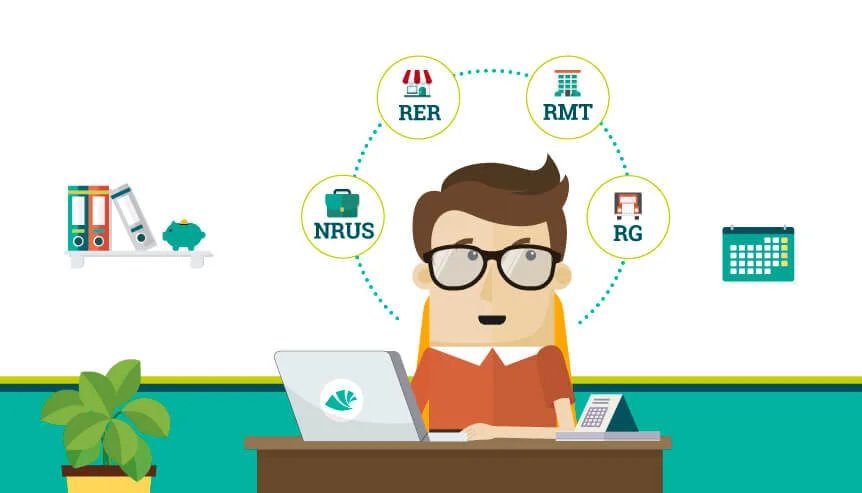
The tax regimes are essentially differentiated by the company’s income level, the value of its sales and the number of workers.
1. New Simplified Single Regime (NRUS):
Only natural persons can apply and they only issue sales tickets. They only have to make a single monthly payment online or in banks; and this payment will depend on the amount of income or purchases made in the month.
Among the ventures that can be in this regime are stores, market stands, shoe shops, bazaars, small restaurants, hairdressers, among others.
Here are not required to use books or accounting records. Neither are they required to present annual declarations for the activities carried out.
Their income or purchase limit is up to PEN 96,000.00 per year and their value of fixed assets must not surpass PEN 70,000.00 not including properties and vehicles.
2. Special Income Tax Regime (RER)
This applies to individuals with business and legal entities that generate income from commercial and/or industrial activities or provide services. They issue all types of receipts.
They are only required to have a Purchase and Sales Register and they only have to present monthly declarations since they are not obliged to present annual declarations.
Their limit of income or purchases is up to PEN 525,000.00 annually and their value of fixed assets must not surpass PEN 126,000.00 not including land and vehicles.
They must only have a maximum of 10 workers per shift.
3. MYPE Tax Regime (RMT)
This regime is focused on micro and small businesses since it has benefits and tax conditions to help in their growth. Both natural and legal persons can apply, and they issue all kinds of receipts.
Accounting books are kept and presented according to the amount of income the company generates and the activities it performs. Also, it must make annual declarations.
Annual net revenue must not exceed 1,700 UIT (S/ 9,350,000 in 2026, with the UIT at S/ 5,500 under Supreme Decree 301-2025-EF). There are no limits on purchases, fixed assets or number of workers. Income tax is 10% on the first 15 UIT of annual net profit and 29.5% on the rest, with monthly advance payments of 1% of revenue while revenue stays under 300 UIT.
4. General Regime (RG):
Medium and large companies, whether individuals with a business or legal entities, which generate third-category income, belong to this regime. They issue all types of receipts.
Accounting books are kept and presented according to the amount of annual income that the company generates and the activities it carries out. The Financial Statement and the Income Statement are prepared and must be considered when presenting the Annual Declaration.
It has no limit on income, purchases, the value of fixed assets, or the number of workers. Income tax is 29.5% of annual net profit, and dividends paid to individuals and to non-resident shareholders are subject to a 5% withholding.
In every regime except the NRUS, companies charge IGV at 18% (16% IGV plus the 2% Municipal Promotion Tax). All four regimes are in force in 2026; the government has proposed merging the business regimes into a single income tax, but nothing changes until a new law is published.

Get help from Easyco
Easyco coordinates company formation in Peru up to the issue of the RUC, and supports companies afterwards with tax, accounting, payroll and legal representation. Contact us to discuss your project.
Easyco also provides:
- Appointment of a legal representative
- Providing a registered office address
- Handling tax and accounting
- Payroll and employer of record services
- Support with your corporate bank account opening
- Trademark registration with INDECOPI
- Recruiting and hiring


